AI Flashcard Apps – Can AI Flashcards Improve Memory Retention?
In today’s fast-paced digital world, learning efficiently has become more important than ever. Whether you are a student preparing for exams, a professional upgrading your skills, or someone exploring new languages, remembering information effectively is the key to success. Traditional flashcards have long been a trusted study tool, but with the rise of Artificial Intelligence (AI), flashcard apps have evolved into powerful, adaptive learning systems.
As someone working in SEO, link building, and content creation, I know the importance of structured knowledge retention. Just like an SEO strategy relies on patterns and algorithms to achieve long-term results, AI flashcards depend on data-driven insights and spaced repetition techniques to help learners strengthen memory. But the real question is: Can AI flashcard apps truly improve memory retention?
This article explores how AI-powered flashcard apps work, their role in enhancing memory, and why they may be the future of personalized learning.
Main Points of the Content
-
Introduction to AI flashcards
-
The science behind memory and retention
-
How AI flashcard apps work
-
Key features of AI-powered flashcards
-
AI vs. traditional flashcards
-
Benefits of AI flashcard apps for students and professionals
-
Real-world applications of AI flashcards
-
Examples of popular AI flashcard tools
-
Role of spaced repetition and active recall in AI flashcards
-
How AI flashcards can be used in SEO and professional learning
-
Advantages of AI flashcard learning
-
Common challenges and limitations
-
Future of AI flashcard technology
-
Final thoughts
1. Introduction to AI Flashcards
Flashcards are one of the simplest yet most effective learning techniques, often used to memorize facts, vocabulary, formulas, and key concepts. AI flashcards take this concept further by using machine learning algorithms to adapt to a learner’s progress. Instead of showing random questions, AI analyzes your performance, identifies weak areas, and creates personalized study sessions to boost long-term retention.
2. The Science Behind Memory and Retention
Memory is built through two important processes: encoding (storing information in the brain) and retrieval (recalling that information when needed). Studies show that repeated retrieval strengthens memory. Traditional flashcards already leverage this principle, but AI flashcards add a scientific layer of optimization through algorithms that determine when and what you should review.
For example, if you frequently forget certain terms, the app will present them more often until they become part of your long-term memory.
3. How AI Flashcard Apps Work
AI-powered flashcard apps function by:
-
Tracking user responses over time.
-
Measuring accuracy and speed of recall.
-
Identifying knowledge gaps.
-
Adjusting the frequency of questions based on performance.
-
Using spaced repetition systems (SRS) to improve retention.
This makes the learning experience dynamic, ensuring that users focus on weak areas without wasting time on information they already know well.
4. Key Features of AI-Powered Flashcards
Modern AI flashcard apps often include:
-
Adaptive learning: Adjusts content difficulty based on performance.
-
Spaced repetition: Automatically schedules reviews at scientifically proven intervals.
-
Voice and image recognition: Helps with language learning and visual memory.
-
Gamification: Adds elements like streaks, rewards, or progress tracking to keep users motivated.
-
Integration with content sources: Some apps allow you to create flashcards from textbooks, PDFs, or even web articles.
5. AI vs. Traditional Flashcards
| Feature | Traditional Flashcards | AI Flashcards |
|---|---|---|
| Personalization | None | High |
| Time efficiency | Moderate | Optimized |
| Progress tracking | Manual | Automated |
| Spaced repetition | User-controlled | AI-driven |
| Engagement | Limited | Gamified & interactive |
Clearly, AI flashcards offer a smarter, more engaging approach.
6. Benefits of AI Flashcard Apps for Students and Professionals
-
Students: Learn faster, retain more, and prepare effectively for exams.
-
Language learners: Build vocabulary with adaptive practice.
-
Professionals: Retain knowledge in areas like SEO strategies, coding, or marketing frameworks.
-
Medical students: Memorize complex terms and procedures.
-
Corporate training: Reinforce employee learning in a structured way.
7. Real-World Applications of AI Flashcards
-
Language learning (e.g., English, French, Chinese vocabulary).
-
STEM education (formulas, equations, and theories).
-
Professional certifications (IT, medical, legal, or finance).
-
SEO and marketing (key terms, ranking factors, and digital trends).
-
Daily productivity (quotes, reminders, or personal goals).
8. Examples of Popular AI Flashcard Tools
Some well-known AI-powered flashcard platforms include:
-
Anki with AI plugins
-
Quizlet with AI study assistant
-
Brainscape
-
RemNote
-
Memrise (for languages)
These platforms combine traditional flashcards with AI-driven personalization.
9. Role of Spaced Repetition and Active Recall in AI Flashcards
Two critical techniques behind AI flashcards are:
-
Spaced Repetition: Reviewing information at increasing intervals strengthens long-term memory.
-
Active Recall: Forcing the brain to retrieve answers rather than just reading them reinforces retention.
AI combines these principles to deliver maximum learning impact.
10. How AI Flashcards Can Be Used in SEO and Professional Learning
In SEO and link building, staying updated with new algorithms, ranking factors, and digital strategies is essential. Creating AI flashcards for:
-
Google ranking signals
-
SEO tools shortcuts
-
Backlink strategies
-
Content marketing frameworks
…can help professionals reinforce critical knowledge and apply it more effectively in real projects.
11. Advantages of AI Flashcard Learning
-
Personalized learning experience
-
Saves time by focusing on weak areas
-
Higher retention rates through spaced repetition
-
Motivating and engaging study sessions
-
Can be applied to any subject or profession
12. Common Challenges and Limitations
-
Requires initial setup of flashcards.
-
Dependence on technology and device availability.
-
Some apps may require paid subscriptions for full AI features.
-
Over-reliance on flashcards may reduce critical thinking if not balanced with deeper study.
13. Future of AI Flashcard Technology
AI flashcard apps are evolving rapidly. Future trends may include:
-
Integration with virtual reality (VR) for immersive learning.
-
Use of voice assistants for hands-free recall practice.
-
More advanced natural language processing for generating flashcards directly from study material.
-
Real-time performance analytics for continuous improvement.
14. Final Thoughts
So, can AI flashcards improve memory retention? The answer is a resounding yes. By combining the effectiveness of traditional flashcards with AI-powered adaptability, these tools provide a smarter, more efficient way to learn. They not only save time but also ensure knowledge is reinforced at the right intervals.
Whether you are a student preparing for exams, a professional in SEO and marketing like myself, or someone learning a new language, AI flashcard apps offer a proven pathway to better memory retention and long-term success.
Related Posts

Rabbana Atina Min Ladunka Rahmatan Wa Hayyi Lana Min Amrina Rashada – Meaning in Urdu
Full Dua & English Translation Arabic:رَبَّنَا آتِنَا مِن لَّدُنكَ رَحْمَةً…
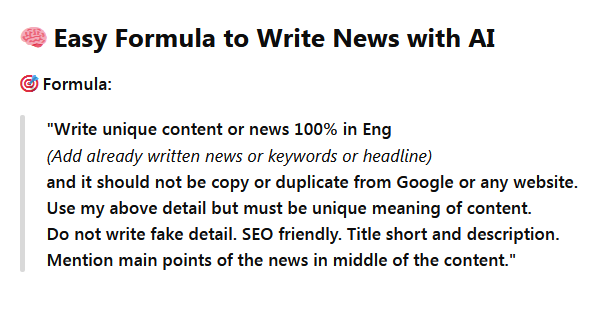
How to write unique news or content using AI
Easy Formula to Write News with AI 🎯 Formula: "Write…

How Social Media Shapes Modern Relationships and Society
Social media has become a core part of modern life.…